
Categories
Latest Post

In the past, our water naturally contained minerals like calcium, magnesium, and potassium, thanks to...
No posts found
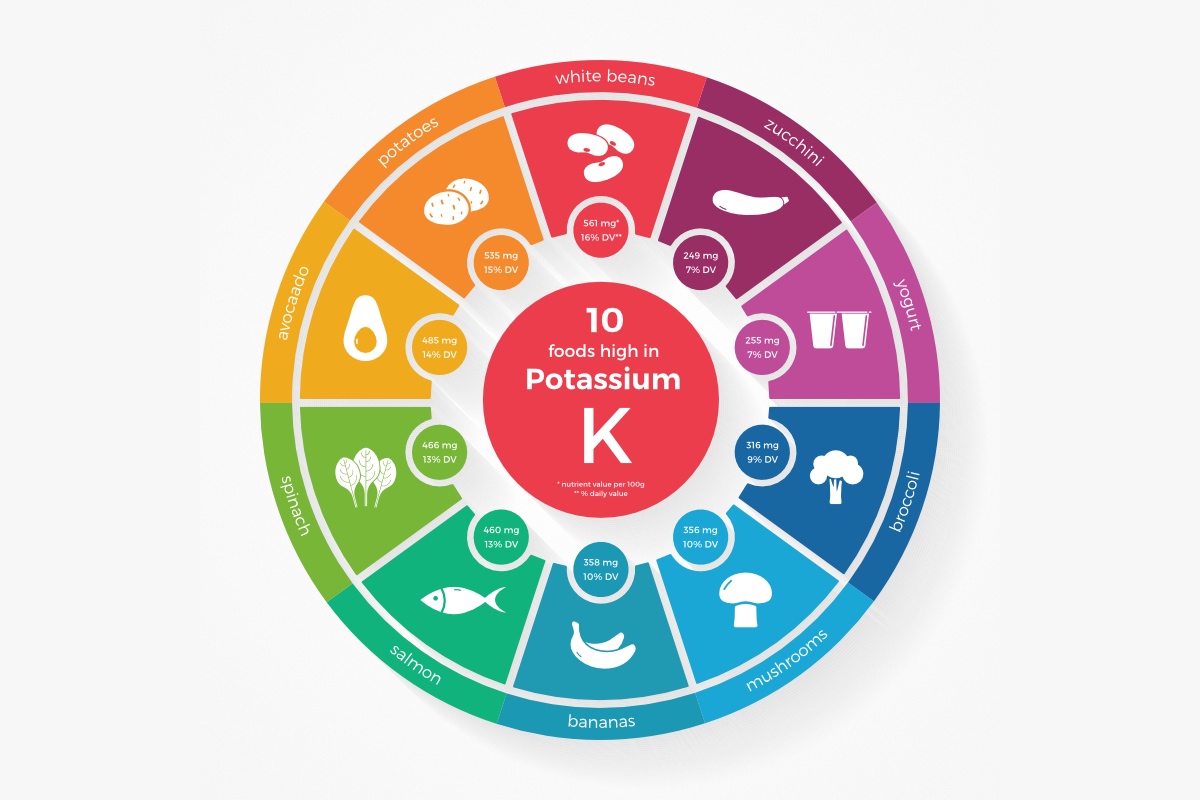
With a typical Western diet, you may not be getting a healthy amount of potassium – and if you’re following a Paleo or Keto diet, the situation can paradoxically be even worse. You would need to eat piles of vegetables just to reach the recommended daily intake.
So what is the right amount of potassium to prevent deficiency and its related symptoms – such as brain fog, heart arrhythmias, and muscle cramps?
This is a long but important message for those of you who like to know the full story – because understanding the details is key to taking control of your health.
Experts often shy away from recommending higher doses of potassium, largely because the FDA – out of an abundance of caution – limits potassium supplements to no more than 99 mg per serving, which is just 2% of the recommended 4,700 mg daily intake.
During my naturopathic studies and while researching my book The Magnesium Miracle, I learned about the critical interactions between potassium and magnesium. Still, I was hesitant to recommend potassium supplements because of the FDA warning. Instead, I encouraged people to make potassium-rich vegetable broth and eat plenty of greens, hoping that would be enough to meet their needs.
I had to revise my stance on potassium supplements – and potassium itself – when I realized that some of my clients with atrial fibrillation, even though they were saturated with ReMag®, still experienced lingering symptoms. I began to suspect low potassium levels. Some of these individuals were also on a keto diet, having significantly reduced their intake of plant-based foods.
As I dug deeper into dietary studies, I found that people in the U.S. consistently consume less than the recommended amount of potassium. In fact, potassium was officially listed as a “nutrient of public health concern” in the 2015–2020 Dietary Guidelines for Americans.
Data from the 2013–2014 National Health and Nutrition Examination Survey (NHANES) showed that the average daily potassium intake from food was only 3,016 mg for men and 2,320 mg for women. That falls far short of the recommended 4,700 mg.
And if someone has a daily potassium deficit of 1,000–2,000 mg, and they’re also magnesium-deficient, they’re being hit twice as hard.
When I decided to develop Pico Potassium®, I realized that all I needed to do was concentrate the stabilized potassium chloride ion already present in ReMyte®. To comply with FDA labeling guidelines, the amount of potassium listed on our Pico Potassium® label is 99 mg per serving.
Here’s what I recommend: if you’re not getting the full 4,700 mg of potassium from your diet, or if your blood potassium levels are not in the high-normal range, or if you’re experiencing symptoms like heart rhythm disturbances – even while taking 4 to 8 teaspoons of ReMag® daily – or if you’re on a diuretic, you may benefit from taking Pico Potassium®.
Pico Potassium® is likely absorbed at about twice the rate of potassium from food or standard supplements. I believe this because absorption studies of ReMag® show that its picometer-sized particles are fully absorbed at the cellular level. While we haven’t yet completed absorption studies on Pico Potassium®, the manufacturing process is the same for both minerals, so we expect similar absorption.
For example, if your diet is lacking 1,200 mg of potassium, you could take up to 6 servings of Pico Potassium®.
6 servings = 594 mg – but with significantly higher absorption.
This form may help bridge the nutritional gap safely and efficiently, especially for those with dietary restrictions or increased physiological demand.
I believe that the app cronometer.com is an excellent tool to help you determine how much potassium you’re actually getting from your diet – and how much you may need to supplement.
Just like ReMag®, Pico Potassium® is fully absorbed at the cellular level, delivering maximum mineral support to the body where it needs it most.
Aloha,
Dr. Carolyn Dean
Warning!
This website is for informational purposes only and is not intended as a substitute for professional medical advice.
Disclaimer!
We do not treat, diagnose, cure, or attempt to prevent any diseases, and no advice or customer testimonials shared in reviews should be interpreted as evidence of specific health outcomes from using our products. Results may vary. Nothing stated on this website is intended to replace medical advice, prevention, or treatment.